What Is UGC, and Why It Outperforms AI-Generated Content
 Daniel Hangan4 min read
User-generated content (UGC) outperforms AI-generated content because it builds trust, feels authentic, and converts better across ads, social media, and SEO.
AI-generated content is everywhere. From ad scripts to social posts, brands are using AI to produce content faster than ever. But speed doesn’t always equal performance.
Across paid ads, landing pages, and social media, UGC (User-Generated Content) consistently outperforms AI-generated content in engagement, trust, and conversions.
So what exactly is UGC, and why does it work better than AI in real marketing scenarios? Let’s break it down.
What Is UGC (User-Generated Content)?
User-Generated Content (UGC) is content created by real people rather than brands or algorithms. In marketing, this usually includes:
- Short-form videos recorded by real users or creators
- Product reviews and testimonials
- “Reaction-style” videos explaining how someone uses a product
- Social media posts featuring real experiences
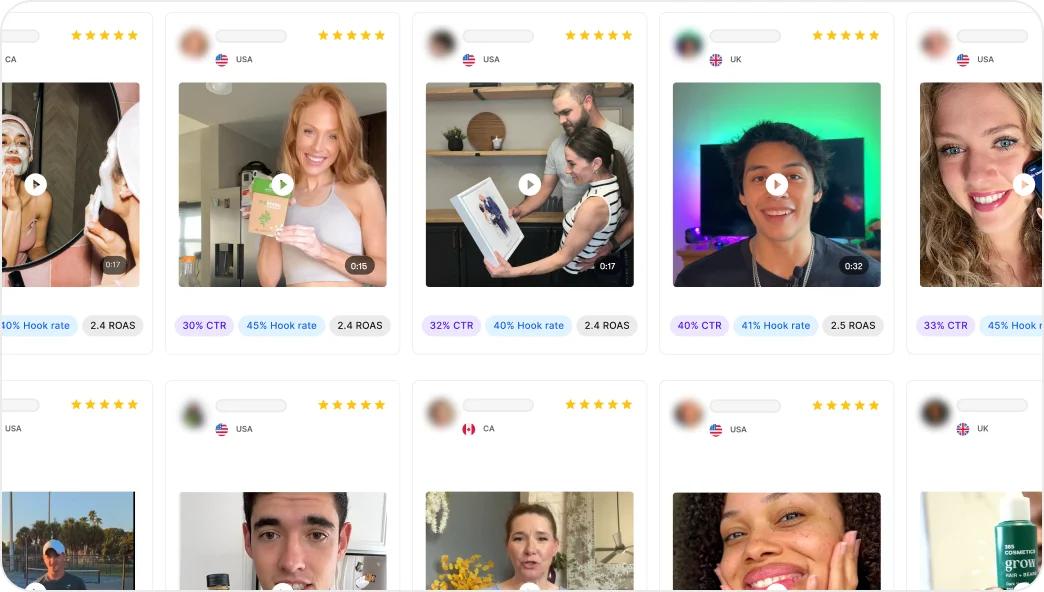
In performance marketing, UGC most commonly appears as short video ads that look native to platforms like TikTok, Instagram Reels, or YouTube Shorts.
The key defining factor of UGC is authenticity. It feels real because it is real.
What Is AI-Generated Content?
AI-generated content is created by algorithms trained on massive datasets. In marketing, this includes:
- AI-written blog posts and ad copy
- AI-generated images or videos
- AI voiceovers or avatars
- Scripted content created without real human experience
AI content excels at speed, scale, and consistency. But it struggles with something far more important in marketing: credibility.
The Core Difference: Trust vs Efficiency
The biggest difference between UGC and AI-generated content comes down to how people perceive it.
- UGC builds trust
- AI content optimizes efficiency
Marketing performance depends far more on trust than efficiency.
People don’t buy because content exists.
They buy because they believe it.
Why UGC Outperforms AI-Generated Content
1. UGC Feels Real (Because It Is)
Audiences are becoming extremely good at spotting AI-generated content. Even when it looks polished, it often feels generic or emotionally flat.
UGC, on the other hand:
- Includes natural pauses, imperfections, and emotion
- Uses real language that people actually speak
- Feels spontaneous instead of scripted
That “imperfect” quality is exactly what makes UGC effective.
2. UGC Builds Immediate Trust
Trust is the biggest conversion driver in digital marketing.
UGC works because it mirrors social proof:
- “Someone like me uses this”
- “This person has nothing to gain by lying”
- “This looks like a genuine experience”
AI content cannot replicate lived experience.
It can describe benefits, but it cannot demonstrate belief.
3. UGC Matches Platform Algorithms Better
Social platforms are designed to reward content that looks native.
UGC videos:
- Blend into organic feeds
- Looks like creator content, not ads
- Generate higher watch time and engagement
Looks
AI-generated videos and images often feel overly polished or unnatural, which hurts performance, especially on TikTok and Meta.
4. UGC Drives Higher Ad Performance
Across paid social campaigns, UGC consistently delivers:
- Higher click-through rates
- Lower cost per acquisition
- Better creative fatigue resistance
Why? Because people engage with people, not brands and not machines.
UGC ads don’t feel like ads.
AI ads usually do.
5. UGC Creates Emotional Connection
Emotion drives action.
UGC creators:
- Share personal stories
- Express frustration, excitement, or surprise
- React in ways audiences relate to
AI can simulate emotion, but it cannot experience it. And audiences can tell the difference.
Can AI Replace UGC?
Short answer: No.
Long answer: AI and UGC serve different roles.
AI is excellent for:
- Ideation and brainstorming
- Drafting outlines or scripts
- Scaling variations of existing content
UGC is essential for:
- Trust-building
- Performance marketing
- Social proof
- Conversion-focused campaigns
The highest-performing brands use AI to support UGC, not replace it.
The Best Strategy: UGC Powered by AI
The smartest marketing teams combine both.
A strong workflow looks like this:
- Use AI to analyze performance data and generate creative angles
- Brief real UGC creators with those insights
- Test multiple UGC videos quickly
- Scale what converts
AI accelerates the process.
UGC delivers the results.
Why Google Also Favors UGC-Style Content
From an SEO perspective, UGC aligns perfectly with Google’s E-E-A-T framework:
- Experience: Real users sharing real outcomes
- Expertise: First-hand usage instead of generic claims
- Authority: Social proof and brand mentions
- Trust: Authenticity over automation
Google increasingly prioritizes content that demonstrates actual experience, not just correct information.
Final Thoughts
AI-generated content is fast, scalable, and useful, but it lacks one critical ingredient: human credibility.
UGC wins because:
- It’s authentic
- It builds trust
- It feels native
- It converts better
In a world flooded with AI content, real human voices stand out more than ever.
If your goal is performance, not just production, UGC isn’t optional. It’s essential.